

[El documental demuestra que el atentado del 11 de septiembre de 2001 fue una conspiración, mostrando inconsistencias en las versiones oficiales de lo ocurrido, por ejemplo que el colapso de las Torres Gemelas y el WTC 7 del World Trade Center no fue causado por un intenso calor que finalmente doblegara la estructura de acero del edificio, si no que fue causado por explosivos que serían los únicos en causar los daños necesarios para derrumbar las dos torres. En cuanto al Pentágono se cuestionan varias discrepancias, y se afirma que en realidad no existe una evidencia sólida del choque del avión comercial. Loose Change: Final Cut, va más allá, pues no sólo se trata de un tercer episodio renovado de la trilogía, sino que se trata de una nueva película con muchas y nuevas escenas nunca vistas, comentarios, entrevistas y el testimonio de testigos presenciales]
5.24.2009


5.23.2009
Unearthing the Mayan Creation Myth
·Researchers find that the tale of the "Hero Twins" goes back more than 2,000 years
http://discovermagazine.com/2009/jun/05-unearthing-the-mayan-creation-myth
http://discovermagazine.com/2009/jun/05-unearthing-the-mayan-creation-myth
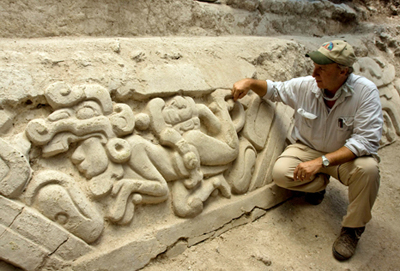
Archaeologists who have uncovered two massive carved stucco panels in the Mirador Basin of Guatemala’s northern rain forest say they are the earliest known representation of the Mayan creation myth, predating other such artifacts by a millennium. According to the researchers, the panels—26 feet long and 20 feet high, with images of monsters, gods, and swimming heroes—date to 300 B.C. They formed the sides of a channel that carried rainwater into a complex system of stepped pools, where it was stored for drinking and agriculture.
Idaho State University archaeologist Richard Hansen, who is directing the ongoing excavation, says that the panels’ carved images depict an important scene from the Popol Vuh, a text of the Mayan myth that was first recorded in the 16th century. In the part of the story shown, the Hero Twins swim through the underworld after retrieving the head of their father, the deity Hun Hunahpu.
Some historians dismiss the Popol Vuh as a contaminated document, containing not only ancient Mayan mythology but also contemporary Spanish Catholic influences. The discovery of the panels establishes key portions of the stories as genuinely Mayan. “We can now extend the authenticity of the creation myth back another 1,000 years,” Hansen says.
[Source: discovermagazine.com]
Idaho State University archaeologist Richard Hansen, who is directing the ongoing excavation, says that the panels’ carved images depict an important scene from the Popol Vuh, a text of the Mayan myth that was first recorded in the 16th century. In the part of the story shown, the Hero Twins swim through the underworld after retrieving the head of their father, the deity Hun Hunahpu.
Some historians dismiss the Popol Vuh as a contaminated document, containing not only ancient Mayan mythology but also contemporary Spanish Catholic influences. The discovery of the panels establishes key portions of the stories as genuinely Mayan. “We can now extend the authenticity of the creation myth back another 1,000 years,” Hansen says.
5.22.2009
EUROPEAN EXOPOLITICS SUMMIT 2009
A New Paradigm for a World in Crisis
http://www.disclose.tv/forum/viewtopic.php?f=3&t=4308

![Reblog this post [with Zemanta]](http://img.zemanta.com/reblog_c.png?x-id=cf2733c3-05d5-40e7-956e-39122709e83d)
http://www.disclose.tv/forum/viewtopic.php?f=3&t=4308
On the 25th & 26th of July, 2009, the European Exopolitics Summit will set an important milestone in the Old Continent. This event hopes to present a new social approach to a vital principle of society that, for many years, has been left out, ridiculed and denied. We are not alone in the Universe and we have never been...
With this premise as a starting point, Dr. Michael Salla, founder of the Exopolitics Institute, defines “The Science of Exopolitics” as the science that studies the key individuals, political institutions and processes associated with extraterrestrial life. According to Alfred L.Webre, who fathered the term, as well as this new paradigm for the 21st century; exopolitics is the study of government and political processes in an interstellar society.
This summit will, on one side, present the evidence of the extraterrestrial presence through vast intelligence and military testimonies compiled by such authorities in the field as Dr. Steven Greer, Nick Pope, Dr. Michael Salla, Alfred L. Webre, Paola Harris, Klaus Dona, Stephen Bassett and Robert Dean.
On another, the new paradigm proposed by exopolitics will be presented as well. The implications this new paradigm has will be discussed: new technologies, free energy, amongst other concepts, that are essential for humanity's development; with the participation of exopolitics' various european members.
An event which aspires to pave over outdated ways and help build an alternative to the present model of socioeconomic development, a model currently undergoing a profound crisis, a model that does not offer viable solutions.
[Source: disclose.tv]
With this premise as a starting point, Dr. Michael Salla, founder of the Exopolitics Institute, defines “The Science of Exopolitics” as the science that studies the key individuals, political institutions and processes associated with extraterrestrial life. According to Alfred L.Webre, who fathered the term, as well as this new paradigm for the 21st century; exopolitics is the study of government and political processes in an interstellar society.
This summit will, on one side, present the evidence of the extraterrestrial presence through vast intelligence and military testimonies compiled by such authorities in the field as Dr. Steven Greer, Nick Pope, Dr. Michael Salla, Alfred L. Webre, Paola Harris, Klaus Dona, Stephen Bassett and Robert Dean.
On another, the new paradigm proposed by exopolitics will be presented as well. The implications this new paradigm has will be discussed: new technologies, free energy, amongst other concepts, that are essential for humanity's development; with the participation of exopolitics' various european members.
An event which aspires to pave over outdated ways and help build an alternative to the present model of socioeconomic development, a model currently undergoing a profound crisis, a model that does not offer viable solutions.
[Source: disclose.tv]
Handbook For The New Paradigm by George Green

Morley Safer Doesn’t Trust Citizen Journalism
http://www.newscorpse.com/ncWP/?p=1275

Veteran newsman and 60 Minutes correspondent, Morley Safer, just won the Fred Friendly First Amendment Award from Quinnipiac University’s School of Communications. His long and distinguished career certainly justifies receiving this honor. It’s too bad he had to spoil the ceremony with the crotchety old man impression that he must have picked up from Andy Rooney.
In an attempt to address his concern for the withering state of newspapers, Safer warned that the medium’s decline “threatens all of journalism and, by extension, our precarious right to know.” He stated his belief that newspapers provide the source material for stories presented in other mediums. There is a case to be made for these assertions, but he went too far when he attacked new media, characterizing it as crammed with nuts:
In an attempt to address his concern for the withering state of newspapers, Safer warned that the medium’s decline “threatens all of journalism and, by extension, our precarious right to know.” He stated his belief that newspapers provide the source material for stories presented in other mediums. There is a case to be made for these assertions, but he went too far when he attacked new media, characterizing it as crammed with nuts:
“The blogosphere is no alternative, crammed as it is with the ravings and manipulations of every nut with a keyboard [...so, he's talking about me, isn't he?!]. Good journalism is structured and structure means responsibility,” he said. He added later, “…I would trust citizen journalism as much as I would trust citizen surgery.”
If Safer is really concerned with responsibility, he ought not to lash out indiscriminately at online journalism. If he wants to cast a net around “every nut with a keyboard,” and label them all journalists, then I should be able to do the same with his medium and every nut with a microphone.
Surely there are manipulative ravers on the Internet, but they could hardly be called journalists. The same is true with television and newspapers. Josh Marshall (a reporter of proven reliability) and Michelle Malkin (a purveyor of bias and propaganda), are two completely different species. Credible and principled Internet journalists would cringe at the thought of being associated with likes of Matt Drudge. Would Safer fare any better by being lumped together with Rush Limbaugh and Glenn Beck? Does Safer think that Ann Coulter brings honor to the newspapers who carry her column? Does he think that the National Enquirer or the New York Post are structured and responsible? If Safer wants to draw parallels between online reporters with their old media equivalents, he should not be making apples to idiots comparisons.
It would also be helpful if Safer refrained from disparaging the public at large. Safer’s analogy to “citizen surgery” carries an insulting implication that “citizen” equates to “unqualified.” Many citizens are quite capable of producing good journalism. And, perhaps to Safer’s surprise, some journalists are, in fact, good citizens. The two designations are not mutually exclusive. A better analogy might compare a modern surgeon with an old-school sawbones who refused to use an MRI or other advanced technologies. I expect that most people would prefer the modern surgeon. And as it turns out, most people prefer new media, as demonstrated in this poll:
Surely there are manipulative ravers on the Internet, but they could hardly be called journalists. The same is true with television and newspapers. Josh Marshall (a reporter of proven reliability) and Michelle Malkin (a purveyor of bias and propaganda), are two completely different species. Credible and principled Internet journalists would cringe at the thought of being associated with likes of Matt Drudge. Would Safer fare any better by being lumped together with Rush Limbaugh and Glenn Beck? Does Safer think that Ann Coulter brings honor to the newspapers who carry her column? Does he think that the National Enquirer or the New York Post are structured and responsible? If Safer wants to draw parallels between online reporters with their old media equivalents, he should not be making apples to idiots comparisons.
It would also be helpful if Safer refrained from disparaging the public at large. Safer’s analogy to “citizen surgery” carries an insulting implication that “citizen” equates to “unqualified.” Many citizens are quite capable of producing good journalism. And, perhaps to Safer’s surprise, some journalists are, in fact, good citizens. The two designations are not mutually exclusive. A better analogy might compare a modern surgeon with an old-school sawbones who refused to use an MRI or other advanced technologies. I expect that most people would prefer the modern surgeon. And as it turns out, most people prefer new media, as demonstrated in this poll:
- 67% believe traditional journalism is out of touch with what Americans want from their news.
- 32% said Internet sites are their most trusted source for news and information, followed by newspapers (22%), television (21%) and radio (15%).
- 75% believe the Internet has had a positive impact on the overall quality of journalism.
- 69% believe media companies are becoming too large and powerful to allow for competition.
There is a notable irony in that Safer would level these criticisms while accepting an award honoring the First Amendment. A true advocate for a free press would welcome more public participation, not less. After all, what could be more representative of free expression, and a free press, then citizen journalism?
[Source: newscorpse.com]
The Ruling Class-Sponsored Race War and the Balkanization of America: Secession Fever
http://www.conspiracyarchive.com/Articles/Secession-Fever.htm

Homeland Insecurity
Activists on the American political landscape fear their government might consider them the enemy. Their concern isn’t driven by paranoia and baseless conspiracy theory. A Department of Homeland Security (DHS) Intelligence Assessment entitled “Rightwing Extremism: Current Economic and Political Climate Fueling Resurgence in Radicalization and Recruitment” is the reason for the fear. The assessment essentially lumps immigration reformists, Christians, pro-lifers, Second Amendment proponents, opponents of globalism, and even veterans into the category of potential terrorists (“Rightwing Extremism: Current Economic and Political Climate Fueling Resurgence in Radicalization and Recruitment”).
Many pundits and pontificators of the controlled conservative movement have claimed that the report is a product of the Obama administration. In reality, however, the report is actually the result of a request made by the Bush administration to the DHS. Fox News’ Catherine Herridge revealed this little-known fact on April 15 when she stated:
Activists on the American political landscape fear their government might consider them the enemy. Their concern isn’t driven by paranoia and baseless conspiracy theory. A Department of Homeland Security (DHS) Intelligence Assessment entitled “Rightwing Extremism: Current Economic and Political Climate Fueling Resurgence in Radicalization and Recruitment” is the reason for the fear. The assessment essentially lumps immigration reformists, Christians, pro-lifers, Second Amendment proponents, opponents of globalism, and even veterans into the category of potential terrorists (“Rightwing Extremism: Current Economic and Political Climate Fueling Resurgence in Radicalization and Recruitment”).
Many pundits and pontificators of the controlled conservative movement have claimed that the report is a product of the Obama administration. In reality, however, the report is actually the result of a request made by the Bush administration to the DHS. Fox News’ Catherine Herridge revealed this little-known fact on April 15 when she stated:
Well this is an element of the story which has largely gone unreported. One [report] looks at right-wing groups, as you mentioned. And a second on left-wing groups. Significantly, both were requested by the Bush administration but not finished until President Bush left office. (“Fox Reporter Contradicts Fox: DHS Report On Right Wing Was Requested By The Bush Administration”)
The Intelligence Assessment painfully illustrates the fact that the government has been co-opted by cliques of deviant elites that desire to crush all opposition, whether it be from the left of the right. Unfortunately, the government would not be able to conduct such demonization campaigns if the activists of the “patriot” movement did not provide a pretext. No discernment has been practiced, and as a result agent provocateurs have poured into anti-authoritarian groups and conducted extremely successful radicalization campaigns. One of the radical ideas disseminated by these Judas goats is secession.
Read more...
$830 Billion to Fight the Enemy That Never Was
http://www.wariscrime.com/2009/05/22/news/830-billion-to-fight-the-enemy-that-never-was/

![Reblog this post [with Zemanta]](http://img.zemanta.com/reblog_c.png?x-id=f751918f-5e25-4518-b5f0-1754e43652d2)
According to the National Priorities Project, the war in Iraq has now cost American taxpayers over $670 billion. That stands in stark contrast to the $100 billion to $200 billion pricetage estimated by President Bush’s chief economic advisor in September 2002 or the $50 billion to $60 billion estimate offered by the White House Office of Management and Budget Director in 2002.
The National Priorities Project explains how it calculates the cost of the war:
The National Priorities Project explains how it calculates the cost of the war:
To date, the total cost of war that has been allocated by Congress is $830.2 billion, with $657.3 to Iraq and $172.9 to Afghanistan. In addition, on April 9, 2009, the new administration requested, in a final emergency supplemental, an additional $ 77.1 billion in war spending. Our estimates are that approximately $52.7 billion of that will be for Iraq and the remaining $24.4 billion for Afghanistan. As more information becomes available, we will revisit our estimates.
The numbers include military and non-military spending, such as reconstruction. Spending only includes incremental costs - additional funds that are expended due to the war. For example, soldiers’ regular pay is not included, but combat pay is included. Potential future costs, such as future medical care for soldiers and veterans wounded in the war, are not included. It is also not clear whether the current funding will cover all military wear and tear. It also does not account for the wars being deficit-financed and that taxpayers will need to make additional interest payments on the national debt due to those deficits.
This number is based on an analysis of the legislation in which Congress has allocated for the war so far and research by the Congressional Research Service (latest report) which has access to Department of Defense financial reports. An article offered by the Strauss Military Reform Project of the Center for Defense Information offers greater insight into the problems of truly knowing how much has been spent on the Iraq War or other military operations.
The numbers include military and non-military spending, such as reconstruction. Spending only includes incremental costs - additional funds that are expended due to the war. For example, soldiers’ regular pay is not included, but combat pay is included. Potential future costs, such as future medical care for soldiers and veterans wounded in the war, are not included. It is also not clear whether the current funding will cover all military wear and tear. It also does not account for the wars being deficit-financed and that taxpayers will need to make additional interest payments on the national debt due to those deficits.
This number is based on an analysis of the legislation in which Congress has allocated for the war so far and research by the Congressional Research Service (latest report) which has access to Department of Defense financial reports. An article offered by the Strauss Military Reform Project of the Center for Defense Information offers greater insight into the problems of truly knowing how much has been spent on the Iraq War or other military operations.
To get a better grasp on exactly how much this war is costing American taxpayers, consider this: at the current rate of spending, the war in Iraq is costing approximately: $108 billion per year, $9 billion per month, $295 million per day, $12.3 million per hour.
[Source: wariscrime.com] Bilderberg Group orders destruction of US Dollar?
http://macedoniaonline.eu/content/view/6807/53/

A new Kremlin report on the shadowy Bilderberg Group, who this past week held their annual meeting in Greece, states that the West’s financial, political and corporate elite emerged from their conclave after coming to an agreement that in order to continue their drive towards a New World Order dominated by the Western Powers, the US Dollar has to be “totally” destroyed.
Even worse, a new US report on these secret Bilderberg meetings states: “Investigative journalist Daniel Estulin, whose information from inside Bilderberg has routinely proven accurate, states that the global elite’s plan to completely destroy the economy and ultimately lower global population by two thirds has stoked fears even within Bilderberg itself that the fallout from such chaos could ultimately result in the globalists losing their control over the world.”
“ABC News today devoted a prominently featured three page story to a “secret meeting” of rich philanthropists which took place earlier this month in New York, and yet one of the biggest news corporations in America was completely silent during a far more important meeting of around 150 of the world’s powerbrokers at the Bilderberg conference last week.”
To the ‘ultimate’ outcome of the plans of the West’s elite classes, connived under the auspicious of the Nazi backed Bilderberg Group, Russian Intelligence Analysts predict that their fears of “losing control” due to the catastrophic chaos they are embroiling our World in are, indeed, valid, especially since the unleashing upon our Earth’s population the bioengineered H1N1 Swine Flu variant that is continuing its unrelenting march of death and illness across our entire Earth, and when coupled with the total collapse of the Global economic system can only lead to Total War.
Read more...
Even worse, a new US report on these secret Bilderberg meetings states: “Investigative journalist Daniel Estulin, whose information from inside Bilderberg has routinely proven accurate, states that the global elite’s plan to completely destroy the economy and ultimately lower global population by two thirds has stoked fears even within Bilderberg itself that the fallout from such chaos could ultimately result in the globalists losing their control over the world.”
“ABC News today devoted a prominently featured three page story to a “secret meeting” of rich philanthropists which took place earlier this month in New York, and yet one of the biggest news corporations in America was completely silent during a far more important meeting of around 150 of the world’s powerbrokers at the Bilderberg conference last week.”
To the ‘ultimate’ outcome of the plans of the West’s elite classes, connived under the auspicious of the Nazi backed Bilderberg Group, Russian Intelligence Analysts predict that their fears of “losing control” due to the catastrophic chaos they are embroiling our World in are, indeed, valid, especially since the unleashing upon our Earth’s population the bioengineered H1N1 Swine Flu variant that is continuing its unrelenting march of death and illness across our entire Earth, and when coupled with the total collapse of the Global economic system can only lead to Total War.
Amazon land giveaway outrages conservationists
·Government says bill will help control deforestation[!!!]
http://www.theprovince.com/Technology/Amazon+land+giveaway+outrages+conservationists/1617003/story.html

![Reblog this post [with Zemanta]](http://img.zemanta.com/reblog_c.png?x-id=6752aa13-2f0c-4e12-a31b-f6a7fd3eb56e)
http://www.theprovince.com/Technology/Amazon+land+giveaway+outrages+conservationists/1617003/story.html
BRASILIA - A law expected to be approved by Brazil's Congress granting 1.2 million people and numerous companies titles to a huge chunk of the Amazon rain forest could provoke a new wave of land-grabbing and deforestation, conservationists warn.
Over three decades, settlers, farmers and speculators have occupied, stolen and sold state land they did not legally own, fueling the destruction of about a fifth of the world's largest rain forest. Land titles are often nonexistent or fake.
[...]
But the bill has provoked outrage among environmental groups, which see it as a major setback to efforts to protect the forest. They say there are contradictions and flaws in the bill that will fuel deforestation.
"Giving away land is an incentive for deforestation, it makes it even cheaper than it already is to clear forest for pasture rather than recover abandoned land," said Brenda Brito, executive director at the research institute Imazon.
The bill, which was approved by the lower house of Congress last week but requires approval in the Senate, would grant more than 1.2 million people land titles totaling nearly 100 million hectares (247 million acres), an area almost the size of France and Spain.
Read more... Over three decades, settlers, farmers and speculators have occupied, stolen and sold state land they did not legally own, fueling the destruction of about a fifth of the world's largest rain forest. Land titles are often nonexistent or fake.
[...]
But the bill has provoked outrage among environmental groups, which see it as a major setback to efforts to protect the forest. They say there are contradictions and flaws in the bill that will fuel deforestation.
"Giving away land is an incentive for deforestation, it makes it even cheaper than it already is to clear forest for pasture rather than recover abandoned land," said Brenda Brito, executive director at the research institute Imazon.
The bill, which was approved by the lower house of Congress last week but requires approval in the Senate, would grant more than 1.2 million people land titles totaling nearly 100 million hectares (247 million acres), an area almost the size of France and Spain.
Secret Billionares summit was held in Manhattan.
http://elluminati.blogspot.com/2009/05/secret-billionares-summit-was-held-in.html

THE secret is out on a clandestine billionaires' summit held in Manhattan earlier this month, when some of the wealthiest Americans met behind closed doors to plot strategies for weathering the economic downturn and coordinating their global philanthropic efforts.
Bill Gates and Warren Buffett organized the hush-hush huddle held in a Rockefeller University conference room on the Upper East Side with Mayor Bloomberg, George Soros, Oprah Winfrey, Eli Broad, Ted Turner, David Rockefeller Sr. and David Rockefeller Jr., among others.
Topic No. 1 during the May 5 conclave was which of the moguls' favorite causes -- such as disease control or government reform -- needed extra help during the downturn. They also sought ways to encourage the common man to keep making small-change donations, an aide to one participant said. IrishCentral.com, which first reported on the powwow, said Gates and Buffett also solicited views on how the group should respond to the global economic climate.
CNN founder Turner, a staunch conservationist and United Nations supporter, was reportedly the most outspoken -- he's known as Capt. Outrageous and the Mouth of the South -- while talk-show queen Oprah was in "listening mode."
In all, the attendees have donated a collective $70 billion since 1996, according to the Chronicle of Philanthropy.
Bloomberg, worth an estimated $20 billion, yesterday declined to discuss specifics of the meeting. "I meet periodically with lots of my friends who are philanthropic," he said. "All my friends are philanthropic or they probably wouldn't be my friends . . . There are meetings all over this city and there are some very powerful people in this city."
[Source: elluminati.blogspot.com]
Bill Gates and Warren Buffett organized the hush-hush huddle held in a Rockefeller University conference room on the Upper East Side with Mayor Bloomberg, George Soros, Oprah Winfrey, Eli Broad, Ted Turner, David Rockefeller Sr. and David Rockefeller Jr., among others.
Topic No. 1 during the May 5 conclave was which of the moguls' favorite causes -- such as disease control or government reform -- needed extra help during the downturn. They also sought ways to encourage the common man to keep making small-change donations, an aide to one participant said. IrishCentral.com, which first reported on the powwow, said Gates and Buffett also solicited views on how the group should respond to the global economic climate.
CNN founder Turner, a staunch conservationist and United Nations supporter, was reportedly the most outspoken -- he's known as Capt. Outrageous and the Mouth of the South -- while talk-show queen Oprah was in "listening mode."
In all, the attendees have donated a collective $70 billion since 1996, according to the Chronicle of Philanthropy.
Bloomberg, worth an estimated $20 billion, yesterday declined to discuss specifics of the meeting. "I meet periodically with lots of my friends who are philanthropic," he said. "All my friends are philanthropic or they probably wouldn't be my friends . . . There are meetings all over this city and there are some very powerful people in this city."
Silvio Berlusconi vows to grab more power in Italy at Parliament’s expense
http://www.timesonline.co.uk/tol/news/world/europe/article6337807.ece

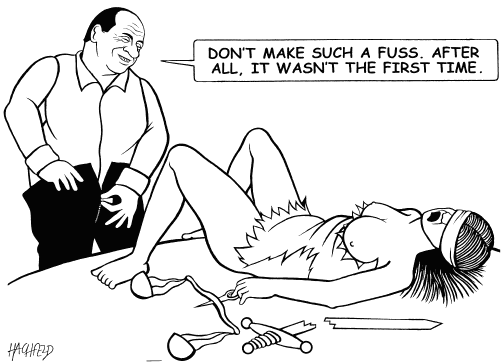
Silvio Berlusconi vowed yesterday to change the Italian constitution to give himself greater power as Prime Minister at the expense of Parliament, which he denounced as “useless”[His parliament must really love him...].
“You have a Government that is for the first time run by an entrepreneur and a team of ministers that resembles a company board in its efficiency, but we have to reckon with a legislature that must be modernised because the premier has virtually no power,”[No power?? I guess if he doesn't have all of the power it will never be enough for him...] Mr Berlusconi told the annual conference of Confindustria, an employers’ federation.
He said that a Bill changing the constitution would have to take the form of a “popular initiative” taken outside parliament, as deputies and senators would not undermine their own power. Under Italian law, Bills can be proposed not only by deputies, but also by groups of 500,000 citizens. “You can’t expect turkeys to vote to bring forward Christmas,” he said — adding that the Lower House should be reduced to 100 deputies.
Mr Berlusconi sought to increase his powers when last in office in 2005. The move was passed by parliament but without the required two-thirds majority, and overturned by a referendum the following year [Yeah, I remember, that was a close one!].
Had it become reality, that reform would have given the Prime Minister the power to appoint and sack ministers as well as dissolve parliament and call elections. At present only parliament can dismiss a minister in a no-confidence vote.
You have to read more...
“You have a Government that is for the first time run by an entrepreneur and a team of ministers that resembles a company board in its efficiency, but we have to reckon with a legislature that must be modernised because the premier has virtually no power,”[No power?? I guess if he doesn't have all of the power it will never be enough for him...] Mr Berlusconi told the annual conference of Confindustria, an employers’ federation.
He said that a Bill changing the constitution would have to take the form of a “popular initiative” taken outside parliament, as deputies and senators would not undermine their own power. Under Italian law, Bills can be proposed not only by deputies, but also by groups of 500,000 citizens. “You can’t expect turkeys to vote to bring forward Christmas,” he said — adding that the Lower House should be reduced to 100 deputies.
Mr Berlusconi sought to increase his powers when last in office in 2005. The move was passed by parliament but without the required two-thirds majority, and overturned by a referendum the following year [Yeah, I remember, that was a close one!].
Had it become reality, that reform would have given the Prime Minister the power to appoint and sack ministers as well as dissolve parliament and call elections. At present only parliament can dismiss a minister in a no-confidence vote.
US must rein in Israel's nuclear arms
http://www.guardian.co.uk/commentisfree/2009/may/22/nuclear-arms-israel-iran-obama

The surprise announcement by Rose Gottemoeller, a US assistant secretary of state, that America would like every nation – including Israel – to sign the nuclear non-proliferation treaty (NPT) has sent shockwaves through Tel Aviv, confirming the fears (or hopes, depending on who you ask) that the Obama administration is initiating a major overhaul of its policy on nuclear proliferation in the Middle East.
The Israeli government will certainly challenge the Obama administration on this issue, as Israel is not likely to co-operate, to put it mildly, with the state department's new logical, fair-minded approach to non-proliferation.
It was none other than Avigdor Lieberman, the Israeli foreign minister, who declared – with a quite a bit of chutzpah – that the US government would adopt whatever policy Israel dictated. But Israelis should realise that the American president cannot be reduced to a puppet of the Israeli government[!!!].
Bearing in mind the possibility of an Israeli attack against Iran's nuclear facilities, it is critical that the US pursue a robust non-proliferation policy, and demand that all countries in the region sign and implement the NPT. This is the only way to prevent another war in the Middle East.
When Israeli leaders talk about halting the Iranian nuclear programme, it is a barely concealed threat of a military strike. Just last month, the Israeli newspaper Ha'aretz published an article by its senior commentator for military affairs calling for Israeli military action against the Iranian nuclear project. When the most liberal daily paper publishes such an article, alarm bells should start ringing.
Read more...
The Israeli government will certainly challenge the Obama administration on this issue, as Israel is not likely to co-operate, to put it mildly, with the state department's new logical, fair-minded approach to non-proliferation.
It was none other than Avigdor Lieberman, the Israeli foreign minister, who declared – with a quite a bit of chutzpah – that the US government would adopt whatever policy Israel dictated. But Israelis should realise that the American president cannot be reduced to a puppet of the Israeli government[!!!].
Bearing in mind the possibility of an Israeli attack against Iran's nuclear facilities, it is critical that the US pursue a robust non-proliferation policy, and demand that all countries in the region sign and implement the NPT. This is the only way to prevent another war in the Middle East.
When Israeli leaders talk about halting the Iranian nuclear programme, it is a barely concealed threat of a military strike. Just last month, the Israeli newspaper Ha'aretz published an article by its senior commentator for military affairs calling for Israeli military action against the Iranian nuclear project. When the most liberal daily paper publishes such an article, alarm bells should start ringing.
Surveillance of protesters ruled illegal
http://www.guardian.co.uk/uk/2009/may/21/police-surveillance-ruling-andrew-wood

Police surveillance of a peaceful protester was ruled unlawful today in a decison that lawyers say will change the way demonstrations and protests are policed.
Judges ruled that specialist surveillance units from the Metropolitan police had breached the human rights of Andrew Wood, an arms trade campaigner, when they photographed him and stored the pictures on a police database.
One judge said there were unresolved civil liberties questions about the way images were taken and retained in "the modern surveillance society". Lord Justice Dyson said there were "very serious human rights issues which arise when the state obtains and retains the images of persons who have committed no offence and are not suspected of having committed any offence".
The judgment is a blow to the Met, which has been criticised over the way it polices protests since last month's G20 demonstrations and the death of Ian Tomlinson.
Tonight, human rights lawyers said the ruling could force police to delete thousands of images of protesters stored on their database unless they have grounds for suspecting them of criminal activity.
Read more...
Judges ruled that specialist surveillance units from the Metropolitan police had breached the human rights of Andrew Wood, an arms trade campaigner, when they photographed him and stored the pictures on a police database.
One judge said there were unresolved civil liberties questions about the way images were taken and retained in "the modern surveillance society". Lord Justice Dyson said there were "very serious human rights issues which arise when the state obtains and retains the images of persons who have committed no offence and are not suspected of having committed any offence".
The judgment is a blow to the Met, which has been criticised over the way it polices protests since last month's G20 demonstrations and the death of Ian Tomlinson.
Tonight, human rights lawyers said the ruling could force police to delete thousands of images of protesters stored on their database unless they have grounds for suspecting them of criminal activity.
EEUU considera "una epidemia" la piratería digital en España
·El Congreso norteamericano acusa al Ejecutivo socialista de soslayar el fenómeno [...y como lo que diga el Congreso norteamericano tiene tanta incidencia en la política interna, ya no sólo, de España, sino de la UE, pues nada...a bajar la cabeza sin rechistar]
http://www.elperiodico.com/default.asp?idpublicacio_PK=46&idioma=CAS&idnoticia_PK=614740&idseccio_PK=1012&h=
[Mirar la siguiente noticia acerca de un profesor de Harvard que alegará un caso en junio de este año (2009) de la siguiente manera:]
Harvard prof tells judge that P2P filesharing is "fair use"
http://www.elperiodico.com/default.asp?idpublicacio_PK=46&idioma=CAS&idnoticia_PK=614740&idseccio_PK=1012&h=
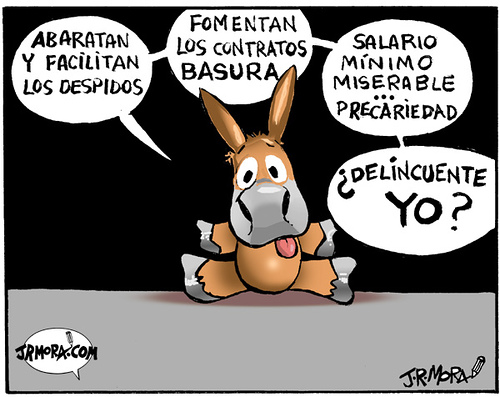
China, México, Rusia, Canadá y España. Por segundo año consecutivo, el Congreso norteamericano ha colocado a este último país entre los cinco donde más se violan los derechos de autor a través de internet. Se trata de una auténtica lista negra que puede tener importantes consecuencias políticas [uuuu...qué miedo!].
Elaborado por 70 representantes de los partidos Demócrata y Republicano, el informe hecho público ayer sostiene que "la piratería en internet ha alcanzado en España un nivel epidémico", pero también hace algo más relevante: censurar al Gobierno de José Luis Rodríguez Zapatero, justo cuando este está superando, junto a su homólogo Barack Obama, las gélidas relaciones que mantenía con la Administración de Bush [CUIDADO! Que se está usando este tema como arma electoral a ambos lados del Atlántico...].
EL NIRVANA DE LAS DESCARGAS
"La piratería a través de las redes P2P de un ordenador a otro se percibe como un fenómeno cultural aceptable --dice el documento--. La situación se agrava por unas políticas gubernamentales que, básicamente, descriminalizan esos intercambios no autorizados de archivos".
El informe, por dos motivos, llega en un momento caliente. Hace apenas tres semanas, el Departamento de Comercio norteamericano también señaló que España venía a ser el nirvana de las descargas. Por otro lado, el Ejecutivo español tiene ante sí la impopular tarea de regular estas prácticas, después de que las operadoras, agrupadas en Redtel, y la industria audiovisual no llegaran a un acuerdo.
PASIVIDAD
"España no hace nada para frenar las descargas y eso es algo que debería avergonzarnos --declaró Joan Navarro, representante de la industria [...hombre! si el representante de la industria no dice esto, entonces quién lo va a decir? El usuario??]--. Hay otros cuatro países, sí, pero en China, México o Rusia tienen otras prioridades y problemas. Este informe refleja la gran preocupación respecto a España".
[Fuente: elperiodico.com]Elaborado por 70 representantes de los partidos Demócrata y Republicano, el informe hecho público ayer sostiene que "la piratería en internet ha alcanzado en España un nivel epidémico", pero también hace algo más relevante: censurar al Gobierno de José Luis Rodríguez Zapatero, justo cuando este está superando, junto a su homólogo Barack Obama, las gélidas relaciones que mantenía con la Administración de Bush [CUIDADO! Que se está usando este tema como arma electoral a ambos lados del Atlántico...].
EL NIRVANA DE LAS DESCARGAS
"La piratería a través de las redes P2P de un ordenador a otro se percibe como un fenómeno cultural aceptable --dice el documento--. La situación se agrava por unas políticas gubernamentales que, básicamente, descriminalizan esos intercambios no autorizados de archivos".
El informe, por dos motivos, llega en un momento caliente. Hace apenas tres semanas, el Departamento de Comercio norteamericano también señaló que España venía a ser el nirvana de las descargas. Por otro lado, el Ejecutivo español tiene ante sí la impopular tarea de regular estas prácticas, después de que las operadoras, agrupadas en Redtel, y la industria audiovisual no llegaran a un acuerdo.
PASIVIDAD
"España no hace nada para frenar las descargas y eso es algo que debería avergonzarnos --declaró Joan Navarro, representante de la industria [...hombre! si el representante de la industria no dice esto, entonces quién lo va a decir? El usuario??]--. Hay otros cuatro países, sí, pero en China, México o Rusia tienen otras prioridades y problemas. Este informe refleja la gran preocupación respecto a España".
[Mirar la siguiente noticia acerca de un profesor de Harvard que alegará un caso en junio de este año (2009) de la siguiente manera:]
Harvard prof tells judge that P2P filesharing is "fair use"
Paul Roberts: "¡Hay que volver a cocinar!"
·Es un especialista en la interrelación entre economía y medio ambiente. Ha publicado El hambre que viene (Ediciones B), un estudio sobre la crisis alimentaria y sus consecuencias
http://www.elperiodico.com/default.asp?idpublicacio_PK=46&idioma=CAS&idnoticia_PK=614750&idseccio_PK=1006&h=

http://www.elperiodico.com/default.asp?idpublicacio_PK=46&idioma=CAS&idnoticia_PK=614750&idseccio_PK=1006&h=
EP--Su libro se titula El hambre que viene. ¿Nos asustamos?
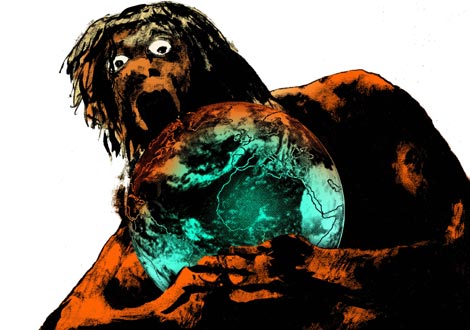
PR--Tomemos conciencia. El panorama no es alentador. La energía y el agua, los dos pilares de la producción de alimentos, empiezan a escasear y la población va en aumento.
--¿Se acabarán los alimentos?
--Será un proceso gradual...
--¿Gradual? ¿Qué pasará?
--El consumo de carne debe bajar. Para producir un kilo de carne se precisan ocho de cereales. Si el resto del mundo empieza a comer tanta como en EEUU --98 kilos al año por norteamericano--, el sistema se colapsará sin remedio.
--¿Algún plan B?
--¿Sálvese quien pueda?
--Es una broma, ¿no?
--Naturalmente que lo es. Pero no hay un plan B porque no hay un plan A. Hay estrategias concretas sobre clima, energía o hambre en ciertas zonas, pero no hay una estrategia global. Si se activaran todas serían como las piezas de un puzle.
--Mientras, ¿qué podemos hacer los ciudadanos?
--La mayoría de las soluciones deben ser tomadas por los gobiernos, que son quienes controlan las infraestructuras, pueden legislar sobre tasas y hacer inversión en tecnologías que permitan la producción de comida con menos agua, energía y fertilizantes, que apuesten por modelos de agricultura más integrados...
--O sea, no podemos hacer nada de nada.
--Sí que podemos. Los consumidores somos receptores pasivos. A lo largo de los últimos 100 años, EEUU ha pasado de producir lo que consumía a importar productos. El consumidor fue desterrado de la producción. ¡Ha llegado el momento de recuperar un papel activo! Dejar de vernos solo como consumidores. Ser un poco productores.
--¿Montamos un huerto en la azotea?
--¡Hay que volver a cocinar!
--Tantos años intentando emanciparnos de las ollas...
--Al cocinar, entramos en el proceso de producción. Nos obliga a ir a comprar los productos, a pedir información sobre ellos, a dedicar un tiempo a pensar cómo cocinarlos. Si hay quien cocina para ti, comer es algo sin interés.
--No hay tiempo para fogones.
--Muchos pasan cuatro horas delante de la tele.
--Eso dice la estadística.
--Y luego nos obsesiona la presencia de fibra, el número de calorías, el colesterol malo y los azúcares refinados, pero olvidamos hacernos las preguntas fundamentales.
--¿Qué preguntas son esas?
--¿De dónde viene la comida? ¿Se produce de manera segura? ¿Hay injusticia en su producción? ¿Dónde estoy yo en la cadena alimentaria?
--¡Con tanta pregunta perderemos el apetito!
--No tema. Los humanos estamos diseñados para preocuparnos mucho por la comida. El hombre siempre se ha espabilado para encontrarla.
--Sin embargo, dé algunas pistas.
--Hay que acostumbrarse a consumir productos de temporada. Y acabar con ese falso sentido de la abundancia. Las fresas duran lo que duran. La temporalidad es algo propio de la vida. Eso es así, mal que le pese a los minoristas, que quieren transmitir la idea de que todo está disponible en todo momento. No quieren pensar en la muerte...
--El hambre sí la recuerdan.
--Se produce comida suficiente para todo el mundo, pero el hambre está ligado a la política y la economía, a la corrupción, a la imposibilidad de llevar alimentos adonde se necesitan. En el África subsahariana la falta de vitamina A causa la ceguera en millones de niños, por ejemplo. ¡Es un escándalo! Como también lo es que en EEUU gastemos más en dietas que en luchar contra el hambre.
--EEUU tiene parte de los mil millones de obesos del mundo.
--Sí. El acceso a la comida es fácil y barato y resulta atractiva.
--A veces, demasiado.
--Los norteamericanos gastan 38.000 millones de dólares en tentempiés. Y resulta chocante ver cómo las empresas se han reprogramado para satisfacer ciertas necesidades. Está tan distanciado el lugar donde se produce el alimento del lugar donde se comercializa que, para arreglar el desaguisado, se emplean todo tipo de colores, sabores y aromas artificiales. ¡Lo simple es lo mejor!
--Solo falta que diga que nos hostigarán pandemias alimentarias...
--Veremos las enfermedades propias del proceso de producción, sí. El problema es que la propagación es hoy muy rápida, cosa que se ha visto con la gripe A. En el caso de la comida, se transporta con tanta rapidez que, cuando se detecta un foco, se ha distribuido ya muy lejos. El problema es el sistema. El sistema.
[Fuente: elperiodico.com]
PR--Tomemos conciencia. El panorama no es alentador. La energía y el agua, los dos pilares de la producción de alimentos, empiezan a escasear y la población va en aumento.
--¿Se acabarán los alimentos?
--Será un proceso gradual...
--¿Gradual? ¿Qué pasará?
--El consumo de carne debe bajar. Para producir un kilo de carne se precisan ocho de cereales. Si el resto del mundo empieza a comer tanta como en EEUU --98 kilos al año por norteamericano--, el sistema se colapsará sin remedio.
--¿Algún plan B?
--¿Sálvese quien pueda?
--Es una broma, ¿no?
--Naturalmente que lo es. Pero no hay un plan B porque no hay un plan A. Hay estrategias concretas sobre clima, energía o hambre en ciertas zonas, pero no hay una estrategia global. Si se activaran todas serían como las piezas de un puzle.
--Mientras, ¿qué podemos hacer los ciudadanos?
--La mayoría de las soluciones deben ser tomadas por los gobiernos, que son quienes controlan las infraestructuras, pueden legislar sobre tasas y hacer inversión en tecnologías que permitan la producción de comida con menos agua, energía y fertilizantes, que apuesten por modelos de agricultura más integrados...
--O sea, no podemos hacer nada de nada.
--Sí que podemos. Los consumidores somos receptores pasivos. A lo largo de los últimos 100 años, EEUU ha pasado de producir lo que consumía a importar productos. El consumidor fue desterrado de la producción. ¡Ha llegado el momento de recuperar un papel activo! Dejar de vernos solo como consumidores. Ser un poco productores.
--¿Montamos un huerto en la azotea?
--¡Hay que volver a cocinar!
--Tantos años intentando emanciparnos de las ollas...
--Al cocinar, entramos en el proceso de producción. Nos obliga a ir a comprar los productos, a pedir información sobre ellos, a dedicar un tiempo a pensar cómo cocinarlos. Si hay quien cocina para ti, comer es algo sin interés.
--No hay tiempo para fogones.
--Muchos pasan cuatro horas delante de la tele.
--Eso dice la estadística.
--Y luego nos obsesiona la presencia de fibra, el número de calorías, el colesterol malo y los azúcares refinados, pero olvidamos hacernos las preguntas fundamentales.
--¿Qué preguntas son esas?
--¿De dónde viene la comida? ¿Se produce de manera segura? ¿Hay injusticia en su producción? ¿Dónde estoy yo en la cadena alimentaria?
--¡Con tanta pregunta perderemos el apetito!
--No tema. Los humanos estamos diseñados para preocuparnos mucho por la comida. El hombre siempre se ha espabilado para encontrarla.
--Sin embargo, dé algunas pistas.
--Hay que acostumbrarse a consumir productos de temporada. Y acabar con ese falso sentido de la abundancia. Las fresas duran lo que duran. La temporalidad es algo propio de la vida. Eso es así, mal que le pese a los minoristas, que quieren transmitir la idea de que todo está disponible en todo momento. No quieren pensar en la muerte...
--El hambre sí la recuerdan.
--Se produce comida suficiente para todo el mundo, pero el hambre está ligado a la política y la economía, a la corrupción, a la imposibilidad de llevar alimentos adonde se necesitan. En el África subsahariana la falta de vitamina A causa la ceguera en millones de niños, por ejemplo. ¡Es un escándalo! Como también lo es que en EEUU gastemos más en dietas que en luchar contra el hambre.
--EEUU tiene parte de los mil millones de obesos del mundo.
--Sí. El acceso a la comida es fácil y barato y resulta atractiva.
--A veces, demasiado.
--Los norteamericanos gastan 38.000 millones de dólares en tentempiés. Y resulta chocante ver cómo las empresas se han reprogramado para satisfacer ciertas necesidades. Está tan distanciado el lugar donde se produce el alimento del lugar donde se comercializa que, para arreglar el desaguisado, se emplean todo tipo de colores, sabores y aromas artificiales. ¡Lo simple es lo mejor!
--Solo falta que diga que nos hostigarán pandemias alimentarias...
--Veremos las enfermedades propias del proceso de producción, sí. El problema es que la propagación es hoy muy rápida, cosa que se ha visto con la gripe A. En el caso de la comida, se transporta con tanta rapidez que, cuando se detecta un foco, se ha distribuido ya muy lejos. El problema es el sistema. El sistema.
5.21.2009
The Hour of Our Time - The Legacy of William Cooper
[William (Bill) Cooper was a former naval officer, decorated veteran, short wave radio broadcaster and world renound lecturer and author, he was shot and killed November 5th 2001 under suspicious circumstances. This is his story]
THE SECRET LAND
[In 1947 Secretary of the Navy James Forrestal sent a naval task force to Antarctic including Admiral Nimitz, Admiral Krusen and Admiral Byrd, called "Operation Highjump". It was touted to be an expedition to find "coal deposits" and other valuable resources, but in actuality they were trying to find the underground base of the nazis (aryans) in Neuschwabenlandt. The nazis had done a very detailed study of Antarctic and were alleged to have built an underground base there. In this regard however, the aryans have had an underground under the ice habitation in Antarctic for more than a million years. . .On the last of many "mapping" flights where all six planes went out, each on certain pre-ordained paths to film and "measure" with magnetometers, Admiral Byrd's plane returned THREE HOURS LATE. It was stated that he had "lost an engine" and had had to throw everything overboard except the films themselves and the results of magnetometer readings in order to maintain altitude long enough to return to Little America. This is most certainly the time when he met with representatives of the aryans and a contingent of nazis. The task force came steaming back with their data which then became classified "top secret". Secretary of the Navy James Forrestal retired and started to "talk". He was put in Bethesda Naval Hospital psychiatric ward where he was prevented from seeing or talking to anyone, including his wife! after a short while he was thrown out the window while trying to hang himself with a bedsheet. It was ruled a suicide, case closed. He was telling people about the underground aryan base]
![Reblog this post [with Zemanta]](http://img.zemanta.com/reblog_c.png?x-id=04a6252a-ead5-48f5-8a54-fadb8346ea19)
Fear On Wall Street - 'The Experts'
[This is a bit difficult to follow...The bald 'expert' seems to loose it right in front of the cameras...Or maybe the realization of the whole Wall Street scam is hitting him hard...]
Men on road to extinction
http://www.telegraph.co.uk/scienceandtechnology/science/sciencenews/5360172/Men-on-road-to-extinction.html

The researcher in human sex chromosomes said the male Y chromosome was dying and could run out within the next five million years.
But Professor Graves said men may follow the path of a type of rodent which still manages to reproduce despite not having the vital genes that make up the Y chromosome.
She told medical students at the annual outreach public lecture at the Royal College of Surgeons (RCSI) in Ireland a second species of human beings could even be born in the future.
"You need a Y chromosome to be male," said Prof Graves.
"Three hundred million years ago the Y chromosome had about 1,400 genes on it, and now it's only got 45 left, so at this rate we're going to run out of genes on the Y chromosome in about five million years.
"The Y chromosome is dying and the big question is what happens then."
The male Y chromosome has a gene (SRY) which switches on the development of testis and pumps out male hormones that determine maleness.
In her lecture, entitled The Decline and Fall of the Y Chromosome and the Future of Men, Prof Graves discussed the disappearance of the Y chromosome and the implications for humans.
She said it was not known what would happen once the Y chromosome disappeared.
"Humans can't become parthenogenetic [asexually reproduce], like some lizards, because several vital genes must come from the male," she continued.
"But the good news is that certain rodent species - the mole voles of Eastern Europe and the country rats of Japan - have no Y chromosome and no SRY gene.
"Yet there are still plenty of healthy male mole voles and country rats running around. Some other gene must have taken over the job and we'd like to know what that gene is."
[Source: telegraph.co.uk]
But Professor Graves said men may follow the path of a type of rodent which still manages to reproduce despite not having the vital genes that make up the Y chromosome.
She told medical students at the annual outreach public lecture at the Royal College of Surgeons (RCSI) in Ireland a second species of human beings could even be born in the future.
"You need a Y chromosome to be male," said Prof Graves.
"Three hundred million years ago the Y chromosome had about 1,400 genes on it, and now it's only got 45 left, so at this rate we're going to run out of genes on the Y chromosome in about five million years.
"The Y chromosome is dying and the big question is what happens then."
The male Y chromosome has a gene (SRY) which switches on the development of testis and pumps out male hormones that determine maleness.
In her lecture, entitled The Decline and Fall of the Y Chromosome and the Future of Men, Prof Graves discussed the disappearance of the Y chromosome and the implications for humans.
She said it was not known what would happen once the Y chromosome disappeared.
"Humans can't become parthenogenetic [asexually reproduce], like some lizards, because several vital genes must come from the male," she continued.
"But the good news is that certain rodent species - the mole voles of Eastern Europe and the country rats of Japan - have no Y chromosome and no SRY gene.
"Yet there are still plenty of healthy male mole voles and country rats running around. Some other gene must have taken over the job and we'd like to know what that gene is."
World's first battery fuelled by air
·The world's first battery fuelled by air - with 10 times the storage capacity of conventional cells - has been unveiled
http://www.telegraph.co.uk/scienceandtechnology/science/sciencenews/5353809/Worlds-first-battery-fuelled-by-air.html

http://www.telegraph.co.uk/scienceandtechnology/science/sciencenews/5353809/Worlds-first-battery-fuelled-by-air.html
Scientists say the revolutionary 'STAIR' (St Andrews Air) battery could now pave the way for a new generation of electric cars, laptops and mobile phones.
The cells are charged in a traditional way but as power is used or 'discharged' an open mesh section of battery draws in oxygen from the surrounding air.
This oxygen reacts with a porous carbon component inside the battery, which creates more energy and helps to continually 'charge' the cell as it is being discharged.
By replacing the traditional chemical constituent, lithium cobalt oxide, with porous carbon and oxygen drawn from the air, the cell is much lighter than current batteries.
And as the cycle of air helps re-charge the battery as it is used, it has a greater storage capacity than other similar-sized cells and can emit power up to 10 times longer.
Professor Peter Bruce of the Chemistry Department at the University of St Andrews, said: "The benefits are it's much smaller and lighter so better for transporting small applications.
"The size is also crucial for anyone trying to develop electric cars as they want to keep weight down as much as possible.
"Storage is also important in the development of green power. You need to store electricity because wind and solar power is intermittent."
[Source: telegraph.co.uk]
The cells are charged in a traditional way but as power is used or 'discharged' an open mesh section of battery draws in oxygen from the surrounding air.
This oxygen reacts with a porous carbon component inside the battery, which creates more energy and helps to continually 'charge' the cell as it is being discharged.
By replacing the traditional chemical constituent, lithium cobalt oxide, with porous carbon and oxygen drawn from the air, the cell is much lighter than current batteries.
And as the cycle of air helps re-charge the battery as it is used, it has a greater storage capacity than other similar-sized cells and can emit power up to 10 times longer.
Professor Peter Bruce of the Chemistry Department at the University of St Andrews, said: "The benefits are it's much smaller and lighter so better for transporting small applications.
"The size is also crucial for anyone trying to develop electric cars as they want to keep weight down as much as possible.
"Storage is also important in the development of green power. You need to store electricity because wind and solar power is intermittent."
Light years ahead
http://www.guardian.co.uk/environment/2009/may/21/active-house-denmark-zero-carbon

![Reblog this post [with Zemanta]](http://img.zemanta.com/reblog_c.png?x-id=91a1db71-0a40-4fd6-a3c5-dad18fc006fa)
Solar panels warm underfloor heating. Fifty square metres of solar cells generate electricity. Computer-controlled windows automatically regulate internal temperature.
This is the last place you would expect to find the solar-powered home of the future. Lystrup, a suburb of Denmark's second city, Aarhus, is grey from street to sky. The spring sun, hidden behind a bank of clouds that doesn't break once on my week- long visit, barely seems strong enough to run a pocket calculator, let alone meet the energy needs of a family of four. But it is here that a dream of zero-carbon living is being realised.
The world's first Active House stands at the crest of an estate. Its south-facing roof is covered in solar panels and solar cells, which between them harness more than enough power to keep the occupants warm and the appliances running. In around 30 years' time, if designers have got their sums right, the excess electricity flowing from the house into Denmark's grid will have cancelled out the energy costs of building it, leaving a non-existent footprint on the earth's resources.
[...]
Rikke Lildholdt, project manager for the Active House, shows me round. "Many people have the idea that if it's ecological, it must be difficult; you have to grow your own vegetables or whatever," she says. "This is about living a comfortable life in a house that produces more energy than it uses."
Read more... This is the last place you would expect to find the solar-powered home of the future. Lystrup, a suburb of Denmark's second city, Aarhus, is grey from street to sky. The spring sun, hidden behind a bank of clouds that doesn't break once on my week- long visit, barely seems strong enough to run a pocket calculator, let alone meet the energy needs of a family of four. But it is here that a dream of zero-carbon living is being realised.
The world's first Active House stands at the crest of an estate. Its south-facing roof is covered in solar panels and solar cells, which between them harness more than enough power to keep the occupants warm and the appliances running. In around 30 years' time, if designers have got their sums right, the excess electricity flowing from the house into Denmark's grid will have cancelled out the energy costs of building it, leaving a non-existent footprint on the earth's resources.
[...]
Rikke Lildholdt, project manager for the Active House, shows me round. "Many people have the idea that if it's ecological, it must be difficult; you have to grow your own vegetables or whatever," she says. "This is about living a comfortable life in a house that produces more energy than it uses."
Enric Duran en libertad provisional bajo fianza de 50.000 euros
http://www.elperiodico.com/default.asp?idpublicacio_PK=46&idioma=CAS&idnoticia_PK=614249&idseccio_PK=1021&h=
![Reblog this post [with Zemanta]](http://img.zemanta.com/reblog_c.png?x-id=67344137-d617-45b5-b163-a65b7534ecea)
La Audiencia de Barcelona ha acordado dejar en libertad provisional, bajo fianza de 50.000 euros, al activista antisistema Enric Duran --popularmente conocido como el Robin Hood de los bancos--, que presuntamente estafó 492.000 euros a 39 entidades para demostrar su desacuerdo con el actual sistema financiero mundial.
Según han informado fuentes judiciales, en su auto la Audiencia estima parcialmente el recurso presentado por la defensa de Duran contra su ingreso en prisión preventiva y le permite eludir la prisión con el pago de 50.000 euros de fianza, la obligación de comparecer semanalmente en el juzgado y la retención del pasaporte.
Sin riesgo de huida
La sección novena de la Audiencia ha considerado oportuno dejar libre al activista al valorar que ya no existe riesgo de huida, principal argumento que esgrimió el juzgado de instrucción para encarcelarlo.
No obstante, el tribunal cree que es posible que el imputado pueda intentar eludir la acción de la justicia, dado que [E. Duran] manifestó que no reconocía la legitimidad del sistema judicial para procesarlo, por lo que ha decidido imponerle una fianza para garantizar que acuda a su juicio.
Estafa y falsedad documental
Enric Duran está en prisión preventiva desde el pasado 19 de marzo, acusado de los delitos de estafa y falsedad documental, por haber engañado presuntamente a 39 bancos que le concedieron casi medio millón de euros en distintos créditos personales y a través de una empresa ficticia.
Con el dinero prestado por los bancos, el activista antisistema publicó el 17 de septiembre pasado la revista Crisis, en la que daba a conocer su estafa, y reapareció el 17 de marzo pasado para presentar su nueva publicación Podemos Vivir Sin Capitalismo, tras lo que fue detenido por los Mossos d'Esquadra.
Acusación particular
En el atestado policial presentado ante el juzgado, consta que son una veintena las entidades financieras supuestamente estafadas, pero solo cuatro de ellas han expresado su intención de ejercer la acusación particular en la causa contra el activista [...y las otras 34 entidades, qué? Tal vez les quede algo de vergüenza...pero que cosas digo! Seguro que no quieren perder aún más clientes, o que la gente se dé cuenta de lo ratas que son!], según fuentes judiciales.
En su declaración ante el juez instructor, el Robin Hood [Su nombre es Enric Duran, sr. periodista de 3 al cuarto...] de los bancos dijo que había destinado el dinero defraudado a editar esas dos publicaciones y a distintos movimientos sociales, sin especificar cuáles.
[Fuente: elperiodico.com] Según han informado fuentes judiciales, en su auto la Audiencia estima parcialmente el recurso presentado por la defensa de Duran contra su ingreso en prisión preventiva y le permite eludir la prisión con el pago de 50.000 euros de fianza, la obligación de comparecer semanalmente en el juzgado y la retención del pasaporte.
Sin riesgo de huida
La sección novena de la Audiencia ha considerado oportuno dejar libre al activista al valorar que ya no existe riesgo de huida, principal argumento que esgrimió el juzgado de instrucción para encarcelarlo.
No obstante, el tribunal cree que es posible que el imputado pueda intentar eludir la acción de la justicia, dado que [E. Duran] manifestó que no reconocía la legitimidad del sistema judicial para procesarlo, por lo que ha decidido imponerle una fianza para garantizar que acuda a su juicio.
Estafa y falsedad documental
Enric Duran está en prisión preventiva desde el pasado 19 de marzo, acusado de los delitos de estafa y falsedad documental, por haber engañado presuntamente a 39 bancos que le concedieron casi medio millón de euros en distintos créditos personales y a través de una empresa ficticia.
Con el dinero prestado por los bancos, el activista antisistema publicó el 17 de septiembre pasado la revista Crisis, en la que daba a conocer su estafa, y reapareció el 17 de marzo pasado para presentar su nueva publicación Podemos Vivir Sin Capitalismo, tras lo que fue detenido por los Mossos d'Esquadra.
Acusación particular
En el atestado policial presentado ante el juzgado, consta que son una veintena las entidades financieras supuestamente estafadas, pero solo cuatro de ellas han expresado su intención de ejercer la acusación particular en la causa contra el activista [...y las otras 34 entidades, qué? Tal vez les quede algo de vergüenza...pero que cosas digo! Seguro que no quieren perder aún más clientes, o que la gente se dé cuenta de lo ratas que son!], según fuentes judiciales.
En su declaración ante el juez instructor, el Robin Hood [Su nombre es Enric Duran, sr. periodista de 3 al cuarto...] de los bancos dijo que había destinado el dinero defraudado a editar esas dos publicaciones y a distintos movimientos sociales, sin especificar cuáles.
5.20.2009
Toward A Science of Consciousness 2009
·Investigating Inner Experience - Brain, Mind, Technology
http://www.asiaconsciousness.org/TSC/themes.html

http://www.asiaconsciousness.org/TSC/themes.html
BRAIN
How can the brain produce 'qualia', the raw feel of experience, of conscious awareness? Will neuroscience alter our ideas about the mind, currently rooted in introspection, folk psychology and philosophy?
In the brain, does consciousness require ascending arousal, recurrent feedback, specific regions, or does it move through the brain as a mobile agent, or conscious pilot? At the level of neurons, does consciousness most directly involve axonal firing explosions, dendritic synchrony, gap junctions or finer-scale activities?
Do sensory inputs fully portray conscious perception, or merely modify and update an ongoing worldview playing out in cortex? Are we conscious of sensory inputs outside attention? Do envelopes of synchrony moving through the brain correlate with mind wandering and the stream of consciousness?
MIND
How can we objectively study subjective experience? What is the place of consciousness in the natural order?
What can Eastern traditions contribute to the science of consciousness, and what can the science of consciousness contribute to the understanding of Eastern traditions?
What are the differences between conscious and unconscious processes in the mind?
TECHNOLOGY
How can conscious experiences be communicated through film, video games, music and interactive media? How can our brain-based world-view be most closely duplicated in technology? How can media activate brain pleasure and reward functions?
Can brain mechanisms for conscious and non-conscious decisions help influence media audience choices? Can the brain’s organizational features be applied to business models?
Can computers be conscious? Can artificial intelligence attain the ‘Singularity’?
How directly can medical technologies couple to conscious and non-conscious brain processes?
www.asiaconsciousness.org
How can the brain produce 'qualia', the raw feel of experience, of conscious awareness? Will neuroscience alter our ideas about the mind, currently rooted in introspection, folk psychology and philosophy?
In the brain, does consciousness require ascending arousal, recurrent feedback, specific regions, or does it move through the brain as a mobile agent, or conscious pilot? At the level of neurons, does consciousness most directly involve axonal firing explosions, dendritic synchrony, gap junctions or finer-scale activities?
Do sensory inputs fully portray conscious perception, or merely modify and update an ongoing worldview playing out in cortex? Are we conscious of sensory inputs outside attention? Do envelopes of synchrony moving through the brain correlate with mind wandering and the stream of consciousness?
MIND
How can we objectively study subjective experience? What is the place of consciousness in the natural order?
What can Eastern traditions contribute to the science of consciousness, and what can the science of consciousness contribute to the understanding of Eastern traditions?
What are the differences between conscious and unconscious processes in the mind?
TECHNOLOGY
How can conscious experiences be communicated through film, video games, music and interactive media? How can our brain-based world-view be most closely duplicated in technology? How can media activate brain pleasure and reward functions?
Can brain mechanisms for conscious and non-conscious decisions help influence media audience choices? Can the brain’s organizational features be applied to business models?
Can computers be conscious? Can artificial intelligence attain the ‘Singularity’?
How directly can medical technologies couple to conscious and non-conscious brain processes?
![Reblog this post [with Zemanta]](http://img.zemanta.com/reblog_c.png?x-id=5e4ee7ec-6c40-4a9b-9091-6e35e6e09f5c)
The Case of the Missing H-Bomb: The Pentagon Has Lost the Mother of All Weapons
·60 years have passed since a damaged jet dropped a hydrogen bomb near Savanah, Ga. -- and the Pentagon still can't find it
http://www.alternet.org/environment/140060/the_case_of_the_missing_h-bomb:_the_pentagon_has_lost_the_mother_of_all_weapons/
![Reblog this post [with Zemanta]](http://img.zemanta.com/reblog_c.png?x-id=7073ccb7-c289-4624-9b3e-be80105fc54b)
http://www.alternet.org/environment/140060/the_case_of_the_missing_h-bomb:_the_pentagon_has_lost_the_mother_of_all_weapons/
Things go missing. It's to be expected. Even at the Pentagon. Last October, the Pentagon's inspector general reported that the military's accountants had misplaced a destroyer, several tanks and armored personnel carriers, hundreds of machine guns, rounds of ammo, grenade launchers and some surface-to-air missiles. In all, nearly $8 billion in weapons were AWOL.
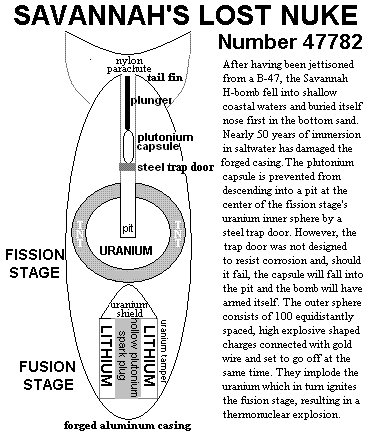
Those anomalies are bad enough. But what's truly chilling is the fact that the Pentagon has lost track of the mother of all weapons, a hydrogen bomb. The thermonuclear weapon, designed to incinerate Moscow, has been sitting somewhere off the coast of Savannah, Georgia for the past 40 years. The Air Force has gone to greater lengths to conceal the mishap than to locate the bomb and secure it.
On the night of February 5, 1958 a B-47 Stratojet bomber carrying a hydrogen bomb on a night training flight off the Georgia coast collided with an F-86 Saberjet fighter at 36,000 feet. The collision destroyed the fighter and severely damaged a wing of the bomber, leaving one of its engines partially dislodged. The bomber's pilot, Maj. Howard Richardson, was instructed to jettison the H-bomb before attempting a landing. Richardson dropped the bomb into the shallow waters of Warsaw Sound, near the mouth of the Savannah River, a few miles from the city of Tybee Island, where he believed the bomb would be swiftly recovered.
The Pentagon recorded the incident in a top secret memo to the chairman of the Atomic Energy Commission. The memo has been partially declassified: "A B-47 aircraft with a [word redacted] nuclear weapon aboard was damaged in a collision with an F-86 aircraft near Sylvania, Georgia, on February 5, 1958. The B-47 aircraft attempted three times unsuccessfully to land with the weapon. The weapon was then jettisoned visually over water off the mouth of the Savannah River. No detonation was observed."
Read more... Those anomalies are bad enough. But what's truly chilling is the fact that the Pentagon has lost track of the mother of all weapons, a hydrogen bomb. The thermonuclear weapon, designed to incinerate Moscow, has been sitting somewhere off the coast of Savannah, Georgia for the past 40 years. The Air Force has gone to greater lengths to conceal the mishap than to locate the bomb and secure it.
On the night of February 5, 1958 a B-47 Stratojet bomber carrying a hydrogen bomb on a night training flight off the Georgia coast collided with an F-86 Saberjet fighter at 36,000 feet. The collision destroyed the fighter and severely damaged a wing of the bomber, leaving one of its engines partially dislodged. The bomber's pilot, Maj. Howard Richardson, was instructed to jettison the H-bomb before attempting a landing. Richardson dropped the bomb into the shallow waters of Warsaw Sound, near the mouth of the Savannah River, a few miles from the city of Tybee Island, where he believed the bomb would be swiftly recovered.
The Pentagon recorded the incident in a top secret memo to the chairman of the Atomic Energy Commission. The memo has been partially declassified: "A B-47 aircraft with a [word redacted] nuclear weapon aboard was damaged in a collision with an F-86 aircraft near Sylvania, Georgia, on February 5, 1958. The B-47 aircraft attempted three times unsuccessfully to land with the weapon. The weapon was then jettisoned visually over water off the mouth of the Savannah River. No detonation was observed."
Message in What We Buy, but Nobody’s Listening
http://www.nytimes.com/2009/05/19/science/19tier.html?hpw

Why does a diploma from Harvard cost $100,000 more than a similar piece of paper from City College? Why might a BMW cost $25,000 more than a Subaru WRX with equally fast acceleration? Why do “sophisticated” consumers demand 16-gigabyte iPhones and “fair trade” coffee from Starbucks?
If you ask market researchers or advertising executives, you might hear about the difference between “rational” and “emotional” buying decisions, or about products falling into categories like “hedonic” or “utilitarian” or “positional.” But Geoffrey Miller, an evolutionary psychologist at the University of New Mexico, says that even the slickest minds on Madison Avenue are still in the prescientific dark ages.
[...]
Suppose, during a date, you casually say, “The sugar maples in Harvard Yard were so beautiful every fall term.” Here’s what you’re signaling, as translated by Dr. Miller:
“My S.A.T. scores were sufficiently high (roughly 720 out of 800) that I could get admitted, so my I.Q. is above 135, and I had sufficient conscientiousness, emotional stability and intellectual openness to pass my classes. Plus, I can recognize a tree.”
Or suppose a young man, after listening to the specifications of the newest iPhone or hearing about a BMW’s “Servotronic variable-ratio power steering,” says to himself, “Those features sound awesome.” Here’s Dr. Miller’s translation:
“Those features can be talked about in ways that will display my general intelligence to potential mates and friends, who will bow down before my godlike technopowers, which rival those of Iron Man himself.”
[...]
But once you’ve spent the money, once you’ve got the personality-appropriate appliance or watch or handbag, how much good are these signals actually doing you? Not much, Dr. Miller says. The fundamental consumerist delusion, as he calls it, is that purchases affect the way we’re treated.
The grand edifice of brand-name consumerism rests on the narcissistic fantasy that everyone else cares about what we buy. (It’s no accident that narcissistic teenagers are the most brand-obsessed consumers.) But who else even notices? Can you remember what your partner or your best friend was wearing the day before yesterday? Or what kind of watch your boss has?
Read more...
If you ask market researchers or advertising executives, you might hear about the difference between “rational” and “emotional” buying decisions, or about products falling into categories like “hedonic” or “utilitarian” or “positional.” But Geoffrey Miller, an evolutionary psychologist at the University of New Mexico, says that even the slickest minds on Madison Avenue are still in the prescientific dark ages.
[...]
Suppose, during a date, you casually say, “The sugar maples in Harvard Yard were so beautiful every fall term.” Here’s what you’re signaling, as translated by Dr. Miller:
“My S.A.T. scores were sufficiently high (roughly 720 out of 800) that I could get admitted, so my I.Q. is above 135, and I had sufficient conscientiousness, emotional stability and intellectual openness to pass my classes. Plus, I can recognize a tree.”
Or suppose a young man, after listening to the specifications of the newest iPhone or hearing about a BMW’s “Servotronic variable-ratio power steering,” says to himself, “Those features sound awesome.” Here’s Dr. Miller’s translation:
“Those features can be talked about in ways that will display my general intelligence to potential mates and friends, who will bow down before my godlike technopowers, which rival those of Iron Man himself.”
[...]
But once you’ve spent the money, once you’ve got the personality-appropriate appliance or watch or handbag, how much good are these signals actually doing you? Not much, Dr. Miller says. The fundamental consumerist delusion, as he calls it, is that purchases affect the way we’re treated.
The grand edifice of brand-name consumerism rests on the narcissistic fantasy that everyone else cares about what we buy. (It’s no accident that narcissistic teenagers are the most brand-obsessed consumers.) But who else even notices? Can you remember what your partner or your best friend was wearing the day before yesterday? Or what kind of watch your boss has?
Arms From U.S. May Be Falling Into Insurgent Hands
http://www.nytimes.com/2009/05/20/world/asia/20ammo.html?_r=1&hp

Insurgents in Afghanistan, fighting from some of the poorest and most remote regions on earth, have managed for years to maintain an intensive guerrilla war against materially superior American and Afghan forces.
Arms and ordnance collected from dead insurgents hint at one possible reason: Of 30 rifle magazines recently taken from insurgents’ corpses, at least 17 contained cartridges, or rounds, identical to ammunition the United States had provided to Afghan government forces, according to an examination of ammunition markings by The New York Times and interviews with American officers and arms dealers.
The presence of this ammunition among the dead in the Korangal Valley, an area of often fierce fighting near Afghanistan’s border with Pakistan, strongly suggests that munitions procured by the Pentagon have leaked from Afghan forces for use against American troops.
[...]
The United States has been criticized, as recently as February by the federal Government Accountability Office, for failing to account for thousands of rifles issued to Afghan security forces. Some of these weapons have been documented in insurgents’ hands, including weapons in a battle last year in which nine Americans died.
[As usual, arm dealers feeding both sides of any conflict...Here's an idea: Stop making guns and ammo!]
Read more...
Arms and ordnance collected from dead insurgents hint at one possible reason: Of 30 rifle magazines recently taken from insurgents’ corpses, at least 17 contained cartridges, or rounds, identical to ammunition the United States had provided to Afghan government forces, according to an examination of ammunition markings by The New York Times and interviews with American officers and arms dealers.
The presence of this ammunition among the dead in the Korangal Valley, an area of often fierce fighting near Afghanistan’s border with Pakistan, strongly suggests that munitions procured by the Pentagon have leaked from Afghan forces for use against American troops.
[...]
The United States has been criticized, as recently as February by the federal Government Accountability Office, for failing to account for thousands of rifles issued to Afghan security forces. Some of these weapons have been documented in insurgents’ hands, including weapons in a battle last year in which nine Americans died.
[As usual, arm dealers feeding both sides of any conflict...Here's an idea: Stop making guns and ammo!]
Subscribe to:
Posts (Atom)


.png)


