Go to recent INPhobe...
Showing posts with label Medicine. Show all posts

3.22.2010

Tullio Simoncini, Oncólogo

El hongo Candida Albicans sería el culpable de la muerte de más de 8,5 millones de personas todos los años en el mundo.
El oncólogo Tullio Simoncini afirma que el bicarbonato de sodio sirve para exterminar este hongo; método que desafía a la medicina luego de más de un siglo de investigaciones sin resultados sustanciales para combatir esta enfermedad.


3.15.2010

Hemp Revolution

This documentary covers a whole lot of ground. It deals with every historical and contemporary aspect of hemp usage and cultivation (mainly in the U.S.), which turns out to be a lot. From describing the production of a fibre much more durable and economic than wood, the documentary discusses hemps multilateral uses as e.g. food products, as a non-polluting fuel and as a pharmaceutical product with much less griveous sideeffects than chemical pharmaceutical products. The film also investigates why America went from a country which produced vast quantities of the non-narcotic industrial hemp, to the complete ban on hemp production in 1938. This story in particular is interesting, and it points out that the large oilbased industries actually had a key role in the aforementioned ban. Food for thought! The conclusion of the documentary could be that hemp may prove to be a valid alternative to both oil and wood in the future.


2.04.2010

AIDS: The Greatest Deadly Lie in the History of Medicine

http://english.pravda.ru/science/health/111056-0/
Where's the AIDS? - english.pravda.ru
Mankind is facing a new threat of swine flu. A few years earlier, bird flu and SARS caused panic all over the world. AIDS has been on the top of the list of “scary” diseases for thirty years.
Where are the millions of victims of SARS and bird flu? Where is deserted Africa allegedly doomed for total extinction from AIDS? Gor Shirdel, M.D. of Irish descent who is currently practicing in Kiev, has cured two patients from AIDS.
“I don’t believe that AIDS is incurable. Weak immune system is an issue that has been around for at least 200 years. It can be solved. Viruses found in the blood of those with AIDS is not the cause of the disease, it’s a consequence of immunodeficiency.
"The world thinks AIDS is incurable because two doctors, an American Robert Gallo and a Frenchman Luc Montagnier, managed to convince the world in the early 1980s that AIDS is caused by the "human immune deficiency virus" (HIV). Montagnier even received a Nobel Prize for his “discovery.” Yet, they cannot find this virus in the human body. AIDS patients are diagnosed through the tests that register antibodies in blood, not HIV.
"These antibodies are developed in blood serum when any virus or bacteria enters the body. The same happens in case of flu, or any other illness or a shot, etc. When antibodies are found in the blood serum, it does not mean that there is a virus in the blood. Positive HIV tests shock patients because proponents of infectious AIDS convinced everyone that an HIV-positive patient will sooner or later die, and that this disease is incurable.
"I think this is the result of purposeful policy of the American Center for Disease Control and Prevention whose annual budget for combating AIDS amounts to two billion dollars.
"However, there are over six thousand outstanding doctors and scientists in the world who voice their arguments against the opinion that AIDS is incurable. They include Peter Duesberg, PhD., the author of “Inventing the AIDS Virus,” Kary Mullis, a biochemist and Nobel laureate, and Robert Willner, the author of “Deadly Deception.”
Read more...

[More info...]
- HIV=AIDS: Fact or Fraud
- House of Numbers (Trailer)
- Prehistoric Gene Reawakens to Battle HIV
- Lluís Botinas, 'El SIDA, un montaje Made in USA' - II Congreso de Ciencia y Espíritu, Barcelona, 11.21.2009
- Dr. Roberto Giraldo - La Gran Estafa del SIDA
- Nueva Medicina Germánica - Dr. Hamer
Reblog it with Zemanta...

11.14.2009

Signature of consciousness captured in brain scans

http://www.newscientist.com/article/dn18150-signature-of-consciousness-captured-in-brain-scans.html
www.newscientist.com - Consciousness captured in brain scan
A telltale signature of consciousness has been detected that takes us a step closer to disentangling the brain activity underlying conscious and unconscious brain processes.
It turns out that there is a similar pattern of neural activity each time we become conscious of the same picture, but not if we process information from the image unconsciously. These contrasting patterns of activity can now be detected via brain scans, and could one day help determine if patients with brain damage are conscious. They might even be used to probe consciousness in animals.
"It's very exciting work," says neuroscientist Raphaël Gaillard of the University of Cambridge, who was not involved in the work. "The use of a reproducibility measure to disentangle conscious and non-conscious processes is genuinely new." Gaillard has previously shown that coordinated activity across the entire brain is one of the signatures of consciousness.
Consistent signals
So far, efforts to find a brain signature of consciousness have focused on the intensity of neural activity, how long it lasts, and whether signals tend to be synchronised across different regions of the brain.
"We were looking for something other than the intensity and duration of the neural activity that characterises conscious neural processing," says Aaron Schurger of Princeton University in New Jersey, who led the new work.
He and his colleagues hypothesised that when the brain is presented with the same sensory input – a picture, say – time after time, then conscious awareness of the picture should produce similar neural activity each time.
Conversely, if the sensory input did not enter conscious awareness, it should produce different brain activity each time because there would be other subconscious processes going on at the same time.
Invisible pictures
To test this hypothesis, Schurger and colleagues used functional magnetic resonance imaging (fMRI) to measure the brain activity in 12 volunteers who were asked to look at a series of images – some designed to elicit a conscious response, others a subconscious one.
The researchers invoked conscious processing simply by showing volunteers pictures of faces or houses. To invoke subconscious processing, the researchers presented volunteers with so-called "invisible stimuli".
These consist of two drawings, of either a house or a face, one shown to each eye. Crucially in each pair, one drawing is in pale orange on a pale green background, the other is the same drawing with the colours reversed. When the brain is confronted with such seemingly contradictory visual inputs it reconciles them by creating a yellow patch. So the volunteer consciously sees nothing but yellow, though the brain has subconsciously processed the face or house.
Probing anaesthesia
A set of fMRI recordings of subjects' temporal lobes backed up the team's hypothesis: each time a house or face was consciously processed by an individual, the resulting patterns in brain activity were similar. When the same image was processed subconsciously, the researchers found that the patterns of brain activity were much more variable. "Neural patterns were more reproducible when the drawings were seen consciously compared to when they were not," says Schurger.
The team thinks that reproducibility – the replication of similar neural patterns in the brain each time it becomes conscious of the same sensory input – gives us clues as to what consciousness is.
It could also be used in the future to tell if someone in a coma is conscious, or probe the consciousness of people under anaesthesia, something that also isn't well understood.
[Source: www.newscientist.com]
Reblog it with Zemanta

11.04.2009

Under the Eigthball (Trailer)

In 1951 at Fort Detrick, Maryland, construction crews built
a hollow metal sphere four stories high.
Inside, germ weapons were to be exploded, creating
mists of infectious aerosols for testing on animals...
...and people.

10.21.2009

House of Numbers (Trailer)

A world without HIV/AIDS may be closer than you think.
In House of Numbers, an AIDS film like no other, the HIV/AIDS story is being rewritten. This is the first film to present the uncensored POVs of virtually all the major players; in their own settings, in their own words. It rocks the foundation upon which all conventional wisdom regarding HIV/AIDS is based. House of Numbers could well be the opening volley in a battle to bring sanity and clarity to an epidemic gone awry.


[This might be of interest: AIDS: A Biological Weapon]

10.11.2009

Vitamin D - What The Pharmaceutical Industry Doesn't Want You to Know!

Dr. John Cannell on vitamin D.
Vitamin D prevents osteoporosis, depression, prostate cancer, breast cancer, and even effects diabetes and obesity. Vitamin D is perhaps the single most underrated nutrient in the world of nutrition. That's probably because it's free: your body makes it when sunlight touches your skin. Drug companies can't sell you sunlight, so there's no promotion of its health benefits. Truth is, most people don't know the real story on vitamin D and health.


10.02.2009

René Quinton (1866–1925)

René Quinton's Marine Plasma - Roy Dittman


Regeneración Celular - Francisco Javier Coll


Entrevista a Laureano A. Domínguez, Impulsor de los 'DISPENSARIOS MARINOS
'
"El agua de mar cura la desnutrición"
Nací en Itaguí (Antioquia, Colombia). Llevo toda la vida investigando las virtudes del agua de mar.

-¿Me está diciendo que el agua de mar cura la desnutrición?
Sí. El agua de mar puede ser un paliativo de enfermedades de tipo cerebrocardiovasculares que se originan por una falta de aporte de oligoelementos durante la primera y segunda infancia.

-¿Debo creer que un niño famélico podría recuperarse bebiendo agua de mar?
Claro, pero esto no es nuevo. René Quinton, un fisiólogo francés de principios del siglo XX, demostró la identidad fisicoquímica entre el plasma de la sangre y el agua de mar, que llegó a utilizar como sustituto del plasma sanguíneo.

-¿Hacía transfusiones de agua de mar?
Sí. Comenzó haciendo transfusiones de agua de mar en perros -primero de modo parcial y luego total- en el Colegio de Francia entre 1898 y 1905, y publicó un libro con los resultados de sus investigaciones: "El agua de mar, medio orgánico". Sus descubrimientos desembocaron en una terapia que podría salvar infinidad de vidas y Quinton se dedicó a abrir dispensarios marinos.

-¿Dónde?
El primero en París, en 1907. Luego, en Montpellier, Lyon, Londres y Egipto, así como en hospitales que aplicaron su método.

-¿Existe alguna documentación sobre el funcionamiento de esos dispensarios?
Hay estudios, historiales de pacientes, gráficas y fotografías de la mayoría de casos que trataron los dispensarios marinos de Quinton. Fíjese en la foto de este niño.

-Está cadavérico.
Un caso de cólera infantil. Aquí están todos los datos: nueve meses, ojos en blanco, facies abdominal... "Llegado el niño en este estado, no tiene más de 24 horas de vida -escribe Quinton-. Tratamiento: inyecciones de plasma marino de 500 cc al día en dos dosis". Y se recuperó en una semana, vea.

-¿Cuál es la teoría?
En el agua de mar no hay tan sólo minerales: están todos los elementos básicos para la vida en la proporción correcta y en estado biodisponible. El agua de mar es un excelente nutriente y un revitalizador celular.

-Si así fuera, ¿por qué desaparecieron aquellos dispensarios marinos?
Por el avance de nuevos fármacos convencionales. De todos modos, mi pretensión es que los científicos investiguen a fondo estos hallazgos, porque pueden ser muy útiles.

-¿Y usted se ha propuesto recuperar los dispensarios marinos?
Sí. Durante cinco años me he dedicado a buscar aliados científicos y he contactado con los grupos de investigación que han seguido el tema, como la Universidad de La Laguna (Tenerife). Mis años de búsqueda culminaron en un simposio internacional en Medellín el pasado marzo. Sobre la base de sus conclusiones, se nos dio permiso para abrir siete dispensarios marinos en Colombia.

-¿Con qué resultados hasta el momento?
Estudios de la facultad de Medicina de la Universidad de Antioquia coordinados por el doctor Soler demuestran que la falta de aporte de oligoelementos básicos para la vida puede cubrirse con agua marina. Basándonos en esto, presentaremos una propuesta a la FAO que podría detener -gracias al uso de agua de mar- muchas muertes por hambre.

-¡Nunca había oído nada igual!
Pues es así de sencillo y barato. Pero hay que tomar la precaución de filtrar el agua a través de la arena. Nuestros dispensarios ya están haciendo mucho bien, y gratis.

-Ustedes, como hizo René Quinton, ¿también inyectarán a los niños agua de mar?
No, nosotros no vamos tan rápidamente. Nosotros estipulamos un mínimo de siete meses dándoles de beber tres vasitos de agua de mar al día (o sea, 500 centímetros cúbicos). Nuestros estudios dicen que estamos obteniendo -por ahora- un cien por cien de curación en casos de desnutrición severa.

-Eso es mucho.
Estamos siguiendo 13.600 casos de niños colombianos desnutridos, y con ese tratamiento básico de tres vasitos de agua de mar al día restablecemos su equilibrio fisiológico, que habrá que mantener con una dieta adecuada. ¿Sabe lo que significa eso?

-¿La panacea universal?
Según el último informe de la FAO, cada cuatro segundos muere un ser humano de hambre. Es ahí donde queremos ayudar con este proyecto de dispensario marino. Pero también estamos trabajando los tratamientos de agua de mar en otros campos.

-¿Por ejemplo?
Con alcohólicos y toxicodependientes, y con muy buenos resultados por el momento.

-Asegúreme que no entraña ningún riesgo.
El agua de mar fija y evita la proliferación de bacterias. Hemos hecho cultivos en diferentes puntos del planeta: los resultados de las analíticas siempre han sido correctos.

-Aun así, estoy segura de que tiene que haber voces en contra de este sistema.
En el congreso internacional que está celebrándose ahora en Badalona tenemos a nuestro favor a médicos, bioquímicos, veterinarios, nutricionistas... Y vamos a proponer un proyecto al Ministerio de Sanidad colombiano para que las escuelas suministren a los niños tres vasitos de agua de mar al día.

-Ah, pero ¿también a niños sanos?
Otro estudio de la facultad de Medicina de Antioquia demuestra que en niños aparentemente bien nutridos hay cierta falta de aporte de oligoelementos básicos, lo que más adelante podría desencadenar -por ejem- plo- accidentes cerebrocardiovasculares entre los 18 y los 30 años. Y ésta, por cierto, es una de la principales causas de muerte que tienen ustedes en Europa.
[Fuente: http://free-news.org/laureano01.htm]
Reblog this post [with Zemanta]

7.03.2009

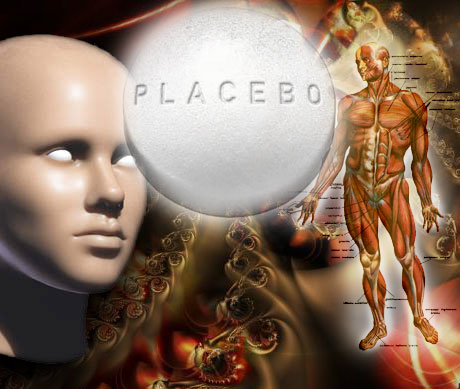
The Placebo Effect - The Triumph of Mind over Body

http://www.nexusmagazine.com/index.php?option=com_docman&task=doc_view&gid=14
http://www.redicecreations.com/ul_img/6999placebo_big.jpg
A neglected phenomenon
One of the most commonly used terms in medical language is the word placebo. The placebo effect is used as a scale for evaluating the effectiveness of new drugs. But what exactly is the placebo effect and what are its consequences in the deterministic structure of Western medicine? The placebo effect has been frequently abused by health professionals to denote and stigmatise a fraud or fallacy. Alternative therapies have often been characterised as merely placebos. But the placebo effect is not a fraudulent, useless or malevolent phenomenon. It occurs independently of the intentions of charlatans or health professionals. It is a spontaneous, authentic and very factual phenomenon that refers to well-observed but uninterpreted and contingent therapies or health improvements that occur in the absence of an active chemical/pharmacological substance. Make-believe drugs—drugs that carry no active chemical substances—often act as the real drugs and provoke therapeutic effects when administered to patients.
[...]
Effects of positive and negative thinking
The placebo effect has been often misunderstood as a solely psychological and highly subjective phenomenon. The patient, convinced of the therapy's effectiveness, ignores his symptoms or perceives them faintly without any substantial improvement of his health; that is, the patient feels better but is not healthier. But can the subjective psychological aspect of the placebo effect account for all of its therapeutic properties? The answer is definite: the placebo effect refers to an alternative curative mechanism that is inherent in the human entity, is motivated by therapeutic intention or belief in the therapeutic potential of a treatment, and implies biochemical responses and reactions to the stimulus of therapeutic intention or belief.
Read more...
Reblog this post [with Zemanta]

6.11.2009

Antipsychotics get tentative OK for kids

http://www.usatoday.com/news/health/2009-06-10-psychiatric-drugs-children_N.htm
http://discoverandrecover.files.wordpress.com/2009/03/drugs.jpg
With varying degrees of enthusiasm, a Food and Drug Administration advisory committee Wednesday concluded that three newer antipsychotic drugs already widely used "off-label" in children and teens are "acceptably safe" and effective in treating them for schizophrenia and bipolar disorder. However, because of the risks involved with the drugs — mainly weight gain, sleepiness and increases in blood fats and sugars — several panel members expressed concerns about their inappropriate use in pediatric patients who don't have schizophrenia or bipolar disorder or are younger than the age range studied. "I'm a little concerned … that soon we'll be seeing 4-, 5- and 6-year-olds treated with these agents," said Kenneth Towbin, a psychiatrist with the National Institute of Mental Health who specializes in children and adolescents. AstraZeneca's Seroquel, Pfizer's Geodon and Eli Lilly's Zyprexa are approved for schizophrenia and bipolar disorder in adults. Two other antipsychotic drugs, Risperdal and Abilify, are approved for those conditions in patients under 18. "I think everybody agrees that we want more medications, rather than fewer," [What!!!] said panelist Gail Griffith, a consumer representative[So, a consumer representative is basically saying, 'consumers want more drugs for their kids'???] from Washington, D.C.
Read more...
Reblog this post [with Zemanta]

5.09.2009

Possible site of free will found in brain

http://www.newscientist.com/article/dn17092-possible-site-of-free-will-found-in-brain.html
http://www.columbia.edu/cu/cssr/images/Free.gifhttp://angelrey.files.wordpress.com/2008/12/el-libre-albedrio1.jpg
Free will, or at least the place where we decide to act, is sited in a part of the brain called the parietal cortex, new research suggests.
When a neurosurgeon electrically jolted this region in patients undergoing surgery, they felt a desire to, say, wiggle their finger, roll their tongue or move a limb. Stronger electrical pulses convinced patients they had actually performed these movements, although their bodies remained motionless.
"What it tells us is there are specific brain regions that are involved in the consciousness of your movement," says Angela Sirigu a neuroscientist at the CNRS Cognitive Neuroscience Centre in Bron, France, who led the study.
Learn more...
Reblog this post [with Zemanta]